
Secure Payments




Plays & Poetry

View as
Sort by
Filter by attributes
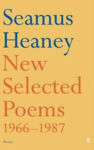
New Selected Poems 1966-1987
9780571143726
This volume contains a selection of work from each of Seamus Heaney's published books of poetry up to and including the Whitbread prize-winning collection, The Haw Lantern (1987). 'His is 'close-up' poetry - close up to thought, to the world, to the emotions.
€17.70
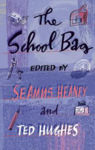
The School Bag
9780571225842
A companion to The Rattle Bag, The School Bag is an engaging and authoritative selection for the classroom. Seamus Heaney and Ted Hughes have chosen an eclectic range of poets read in today's schools, but also those poems that the editors themselves read at school, or those from which they learned the most.
€21.92
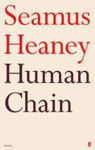
Human Chain
9780571269242
Seamus Heaney's new collection elicits continuities and solidarities, between husband and wife, child and parent, then and now, inside an intently remembered present - the stepping stones of the day, the weight and heft of what is passed from hand to hand, lifted and lowered.
€14.75
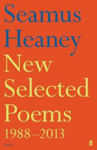
New Selected Poems 1988-2013
9780571321728
Provides an unrivalled account of a period of work that was crowned by the Nobel Prize for Literature in 1995. This book reprints the author's chosen poems from his later years.
€17.70
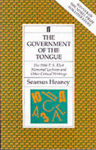
Government Of The Tongue
9780571141517
The title, The Government of the Tongue, carries suggestions of both monastic discipline and untrammelled romanticism, and is meant to raise an old question about the rights and status of poetic utterance itself.
€15.52
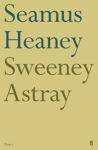
Sweenet Astray
9780571210091
"Sweeney Astray" is Seamus Heaney's version of the medieval Irish work "Buile Suibhne". Its hero, Mad Sweeney, undergoes a series of purgatorial adventures after he is cursed by a saint and turned into a demented flying creature at the Battle of Moira.
€14.80

North
9780571377794
This edition of Seamus Heaney's seminal fourth collection North, reproduced in its elegant first setting and original jacket, marks fifty years since first publication.
€17.21
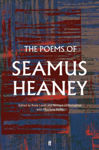
The Poems of Seamus Heaney
9780571340385
Here is the definitive edition of Seamus Heaney's poetry, with illuminating critical notes, including a substantial number of uncollected poems and a selection of poems never published before.
€46.08
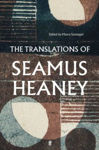
The Translations of Seamus Heaney
9780571342525
This is the first ever collected volume of Seamus Heaney's translations from languages including Old and Middle Irish and English, Medieval Italian, Classical Greek and Latin and Modern Italian, Spanish, French, Romanian, German and Greek.
€41.82
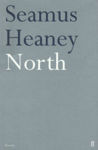
North
9780571108138
Here the Irish experience is refracted through images drawn from different parts of the Northern European experience, and the idea of the north allows the poet to contemplate the violence on his home ground in relation to memories of the Scandinavian and English invasions which have marked Irish history so indelibly.
€15.05
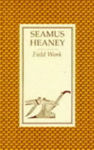
Field Work
9780571114337
A collection of elegies and love poems, and a short sonnet sequence which concentrates on such themes as: the individual's responsibility for his own choices, the artist's commitment to his vocation, the vulnerability of all in the face of circumstance and death.
€15.01
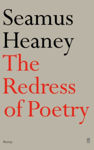
The Redress of Poetry
9780571175376
He proceeds to explore how this 'redress' manifests itself in a diverse range of poems and poets, including Christopher Marlowe's 'Hero and Leander', 'The Midnight Court' by the eighteenth-century Irish poet Brian Merriman, John Clare's vernacular writing and Oscar Wilde's 'The Ballad of Reading Gaol'.
€20.23