
Secure Payments




Plays & Poetry

View as
Sort by
Filter by attributes
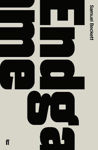
Endgame
9780571243730
Originally written in French and translated into English by Beckett, Endgame was given its first London performance at the Royal Court Theatre in 1957.HAMM: Clov!CLOV: Yes.HAMM: Nature has forgotten us.CLOV: There's no more nature.HAMM: No more nature!
€12.63
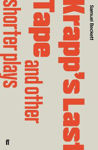
Krapp's Last Tape and Other Shorter Plays
9780571244560
Krapp's Last Tape was first performed by Patrick Magee at the Royal Court Theatre in October 1958, and described as 'a solo, if that is the word, for one voice and two organs: one human, one mechanical. Box - [Pause.] - three, spool - [Pause.] - five.
€15.41
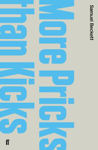
More Pricks Than Kicks
9780571244607
His first published work of fiction (1934), More Pricks Than Kicks is a set of ten interlocked stories, set in Dublin and involving their adrift hero Belacqua in a series of encounters, as woman after woman comes crashing through his solipsism. More Pricks contains in embryo the centrifugal world of Beckett's men and women.
€11.74
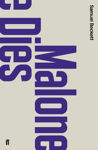
Malone Dies
9780571244638
'Malone', writes Malone, 'is what I am called now.' On his deathbed, and wiling away the time with stories, the octogenarian Malone's account of his condition is intermittent and contradictory, shifting with the vagaries of the passing days: without mellowness, without elegiacs;
€11.74
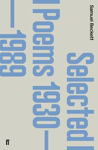
Selected Poems 1930-1988
9780571243723
A selection of poems of Samuel Beckett, from "Whoroscope" (1930) to 'What is the Word' (1988).
€15.73

Collected Poems of Samuel Beckett
9780571249855
It was as a poet that Samuel Beckett launched himself in the little reviews of 1930s Paris, and as a poet that he ended his career. The Collected Poems is the most complete edition of Beckett's poetry and verse translations ever to be published, as well as the first critical edition.
€28.72
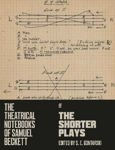
The Theatrical Notebooks of Samuel Beckett: The Shorter Plays
9780571348732
This volume completes the publication of this series of notebooks, the plays in question being Play, Come and Go, Eh Joe, Footfalls, That Time and What Where.
€45.56
Waiting for Godot: A Tragicomedy in Two Acts
9780571244591
Famously described by the Irish critic Vivien Mercier as a play in which 'nothing happens, twice', "En attendant Godot" was first performed at the Theatre de Babylone in Paris in 1953. It was translated into English by Samuel Beckett, and opened at the Arts Theatre in London in 1955.
€12.67

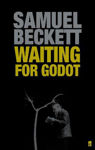
Waiting For Godot
9780571229116
'Nothing happens, nobody comes, nobody goes, it's awful.' This line was adopted by Jean Anouilh, to characterize the first production of "Waiting For Godot" at the Theatre de Babylone, in 1953. Anybody acquinted with Beckett's masterly black comedy would not question the recognition of this twentieth-century literature classic.
€11.53