Secure Payments




Plays & Poetry International
View as
Sort by
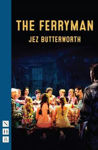
The Ferryman
9781848426382
County Armagh, Northern Ireland, 1981. The Carney farmhouse is a hive of activity with preparations for the annual harvest. A day of hard work on the land and a traditional night of feasting and celebrations lie ahead. But this year they will be interrupted by a visitor.
€13.13
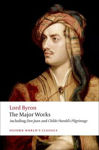
Lord Byron - The Major Works
9780199537334
This authoritative edition was originally published in the acclaimed Oxford Authors series under the general editorship of Frank Kermode. It brings together a unique combination of Byron's poetry and prose - all the major poems, complemented by important letters, journals, and conversations - to give the essence of his work and thinking.
€17.02
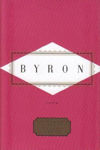
Byron Poems
9781857157147
Byron's poetry took Europe by storm in the early nineteenth century and the poems which made him a star are here represented by a selection of the early lyrics, including still popular pieces such as 'She walks in beauty' and 'We'll go a no more a-roving'.
€13.73
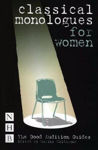
Classical Monologues for Women
9781854598707
Offers audition pieces for actors at all levels. Drawing on her enormous experience in drama training, the author has selected over forty-five monologues for men and another forty-five for women drawn from classical plays throughout the ages and ranging across all of Western theatre. These classical monologues are presented chronologically.
€14.75
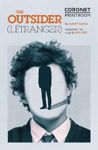
(l*etranger) The Outsider
9781786826657
"Mother died today. Or was it yesterday, I can't be certain." Albert Camus' classic existentialist masterpiece, adapted by Booker Prize-winning author Ben Okri.
€11.64
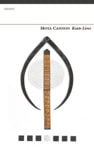
Keats Lives
9781784100605
Moya Cannon's new collection reaches back into the long past, showing how traces left behind - textile fragments, buried thimbles, cave paintings - enable us to make imaginative connections with our distant ancestors, emphasising the commonalities of human lives lived many centuries apart.
€12.12
Donegal Tarantella
9781784107871
Sixth collection by one of Carcanet's celebrated Irish women poets, who include Eavan Boland, Sinead Morrissey, Mary O'Malley, Martina Evans, and Tara Bergin.
€11.80
ADAPTATION REVISITED
9780719060465
Offering a critical reappraisal of a prolific and popular genre, this text also brings new material into the broader field of television studies. It surveys the traditional discourses about adaptation, unearthing assumptions and misconceptions, and explores the problems of previous approaches.
€23.07
The Essential Paradise Lost
9780571355020
After its publication in 1667, John Milton's Paradise Lost was celebrated throughout Europe as a supreme achievement of the human spirit.
€19.50
100 Poets: A Little Anthology
9780300266993
A wonderfully readable anthology of our greatest poetry, chosen by the author of A Little History of Poetry
€13.76