
Secure Payments




Messenger Publications
View as
Sort by
Display per page
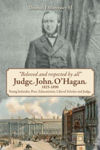
Judge John O'Hagan 1825-1890
9781788125963
Judge John O'Hagan was a Young Irelander, poet, educationist, and liberal scholar.
€19.95
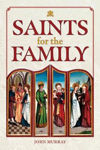
Saints for the Family
9781910248966
Best-selling author of `Saints for Our Time' and `Saints for the Journey' Fr John Murray introduces us to a selection of saints for the family , to mark the World Meeting of Families which takes place in Dublin in August.
€10.81
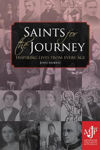
Saints for the Journey: Inspiring Lives from Every Age
9781910248331
An illuminating read for those curious about both well-known and obscure followers of the gospel. An insightful look at the everyday acts of courageous people who upheld the values and principles of the church.
€10.81
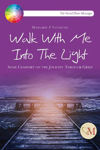
WALK WITH ME INTO THE LIGHT
9781910248133
This booklet is an attempt to walk the journey of loneliness with the person whose heart has been broken by the loss of their beloved. As Jesus walked side by side on the road to Emmaus with his disciples whose hearts were broken, this little book is a companion on your journey of pain and loss.
€5.09
Liturgies with Young People
9781910248850
Liturgies with Young People presents material suitable for liturgies, Eucharistic and non-Eucharistic in schools and other youth centres. A group of experienced chaplains and catechists have put together 20 liturgies suitable for young people in the post-primary age group.
€14.94
The Messenger Advent Booklet: Reflections on the Weekday Readings
9781788124904
In the busy-ness of the season this booklet can open the meaning of God's love, which is the primary message of Christmas: that 'God so loved the world as to send his only Son to save the world'. Advent encourages us to wonder and be amazed at the way God did this and continues to do so in his people today.
€4.95
A Vanishing World: The Irish Country House Photographs of Father Browne
9781788127073
These beautiful photographs display Fr Browne's customary understanding of composition and offer a sympathetic insight into what was by then a fast-vanishing world. This is a priceless record of the Irish country house at a critical moment in its history.
€25.00
Wandering Wicklow Hills with Father Browne
9781788122689
Ireland's finest photographer in the 20th century, Fr Frank Browne repeatedly visited County Wicklow across almost half a century. Over that time, he had the opportunity to capture images of this part of the country as it underwent change and yet, somehow, retained its essential character.
€19.95
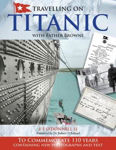
Travelling on Titanic: with Father Browne
9781788125246
As a passenger on the first two legs of Titanic's ill fated voyage, Father Francis Browne SJ's photographs are an immensely important record. Father Browne also assembled material such as an original deck plan, menus, letters to him from fellow passengers, contemporary newspaper cuttings and other documents, many of which are reproduced here.
€25.00
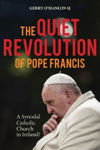
The Quiet Revolution of Pope Francis: A Synodal Catholic Church in Ireland?
9781788120005
Francis advocates a critical openness to contemporary culture, a culture of consultation and open debate, and communal discernment practised at every level of `an entirely synodal church'. O'Hanlon argues that this project offers new hope of a better reading of the `signs of the times' by the Catholic Church.
€13.76
A Dialogue of Hope: Critical Thinking for Critical Times
9781910248812
We live in an Ireland, and a world, where conventional economic models have failed, politics is fractured, what it means to be human is contested, and opposition between secularists and believers is conducted like some kind of Punch-and-Judy show. The dominant narrative of our time is spent. What might replace it?
€12.63