
Secure Payments




Business & Commerce
View as
Sort by
Filter by attributes
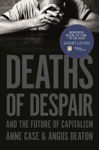
Deaths of Despair and the Future of Capitalism
9780691190785
From economist Anne Case and Nobel Prize winner Angus Deaton, a groundbreaking account of how the flaws in capitalism are fatal for America's working class Life expectancy in the United States has recently fallen for three years in a row-a reversal not seen since 1918 or in any other wealthy nation in modern times.
€25.35
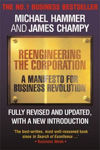
REENGINEERING THE CORPORATION
9781857880977
Revised and updated for the new economy, this text describes how the radical redesign of a company's processes, organization and culture can achieve a quantum leap in performance.
€17.27

Economics: The User's Guide
9780718197032
What is economics? What can - and can't - it explain about the world? Why does it matter? This book teaches economics at Cambridge University, and writes a column for the Guardian.
€14.99
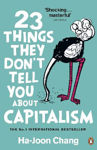
23 Things They Don't Tell You About Capitalism
9780141047973
Turns received economic wisdom on its head to show you how the world really works. In this book, the author destroys the biggest myths of our times and shows us an alternative view of the world, including: there's no such thing as a 'free' market Globalization isn't making the world richer; poor countries are more entrepreneurial than rich ones.
€12.48
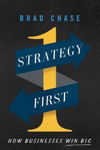
Strategy First: How Businesses Win Big
9781626347120
In Strategy First, Brad Chase, the mind behind some of Microsoft's largest and most successful initiatives, leads readers through his ""strategic theory of relativity,"" a formula that illustrates how the most important aspect of a business leader's role is to create and execute their strategy.
€23.03
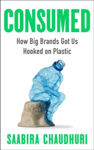
Consumed : How Big Brands Got Us Hooked on Plastic
9781785122163
Over the past seventy years, McDonald's, Coca-Cola, Procter & Gamble, Unilever and other consumer goods makers have harnessed single-use plastics to turbocharge their profits. They've poured billions of dollars into convincing us we need disposable diapers, cups, bags, bottles, shampoo in sachets and plastic-packaged ultra-processed foods. We were never clamouring for any of these items, but this shift towards disposability has fundamentally transformed our daily habits.
€19.60
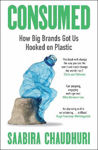
Consumed: How Big Brands Got Us Hooked on Plastic: Longlisted for the FT Business Book of the Year
9781785122170
A vital investigation into how disposability has transformed our lives and why we've been unable to kick our plastic habit by Wall Street Journal reporter Saabira Chaudhuri.
€12.68